
Rice Bran Oil vs Sunflower Oil: Which Is Better for You?
Stand in the oil aisle of any Indian supermarket and you’ll notice the same debate playing out in most households: rice bran oil or sunflower oil? Both sit on the “healthier” shelf, both are recommended by home cooks and doctors alike, and both turn up in adverts promising a happier heart. So which one deserves a place in your kitchen?
The honest answer is that both are reasonable choices as part of a balanced diet. The real differences lie in their smoke point, their antioxidant profile and how they behave in different Indian cooking methods, not in one being “good” and the other being “bad”. Let’s break it down properly.
What Is Rice Bran Oil?
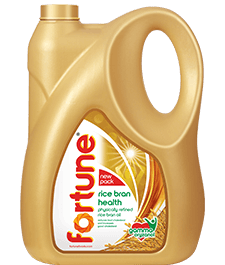
Rice bran oil is extracted from the outer bran layer of rice grains, the thin brown coating left over after the paddy husk is removed. Because this layer is naturally nutrient-dense, the oil pressed from it carries some of that richness through into the bottle.
Nutritional profile
Rice bran oil contains a mix of saturated, monounsaturated (MUFA) and polyunsaturated (PUFA) fats. Nutritionists often note that rice bran oil naturally has a favourable ratio between these three types of fat, which is one reason it’s frequently recommended as part of a heart-conscious diet, alongside regular variation between different cooking oils.
Oryzanol and antioxidant content
The standout feature of rice bran oil is gamma-oryzanol, a naturally occurring group of compounds found in the bran layer. Gamma-oryzanol has been studied for its antioxidant properties and its potential role in supporting a healthy lipid profile. Rice bran oil also contains tocopherols and tocotrienols, forms of natural vitamin E that contribute further antioxidant activity.
Rice bran oil also has a notably high smoke point, generally around 232°C, which makes it well suited to Indian techniques that involve high heat, such as deep frying pooris or a quick tadka for dal.
What Is Sunflower Oil?
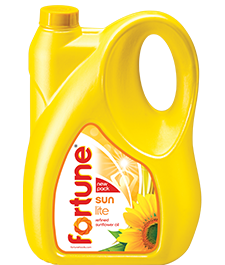
Sunflower oil is pressed from sunflower seeds and has long been a kitchen staple across India, valued mainly for its light texture and neutral taste.
Nutritional profile
Sunflower oil is predominantly made up of polyunsaturated fats, particularly linoleic acid, an omega-6 fatty acid. Because PUFA-rich oils tend to feel lighter on the palate, sunflower oil is often chosen for everyday cooking where a mild flavour is preferred, from a simple upma to shallow-frying vegetables.
Vitamin E content
Sunflower oil is a good source of vitamin E, a fat-soluble antioxidant that plays a role in protecting cells from oxidative stress. This is one reason sunflower oil is sometimes associated with skin health and general wellbeing. Refined sunflower oil also has a high smoke point, generally cited around 250°C, which suits frying and baking.
Rice Bran Oil vs Sunflower Oil: The Difference You Should Know
Here’s how the two oils stack up once you line them upside by side, from heart health to how they behave in the kadhai.
| Specifications | Rice Bran Oil | Sunflower Oil |
|---|---|---|
| Nutrient highlight | Gamma-oryzanol, tocotrienols | Vitamin E, linoleic acid |
| Heart health | Unsaturated fats plus gamma-oryzanol, studied for its role in supporting a healthy lipid profile | Unsaturated fats plus vitamin E, an antioxidant linked to general wellbeing |
| Smoke point | ~232°C | ~250°C |
| Cooking suitability | Deep frying, stir-frying, tadka and other high-heat Indian techniques | Shallow frying, baking and dishes where you don’t want the oil’s flavour to dominate |
| Taste | Mild, slightly nutty | Very light, neutral |
| Versatility | Works well in gravies and tadkas without overpowering spices | Neutral enough for snacks, baked goods and delicate dishes |
Which Should You Choose?
The quick guide below maps common cooking styles to a sensible starting point.
If your kitchen sees a lot of deep frying, pooris or tadka: rice bran oil’s higher smoke point and gamma-oryzanol content make it a dependable everyday choice for high-heat Indian cooking.
If you cook light, mild-flavoured food or bake often: sunflower oil’s neutral taste and vitamin E content tend to suit dishes where you don’t want the oil to be noticed, from cakes to delicately spiced sabzis.
If you’re cooking for a family with mixed needs, say some heavy frying and some light everyday meals: rather than picking one bottle, consider rotating between the two through the week, or choosing a best blended oil that already combines them.
If you’re simply not sure and don’t want to overthink it: most nutritionists suggest varying your cooking oils over time rather than settling on a single one for life, since different oils bring different types of fat and antioxidants to the table.
Why Fortune Xpert Pro Immunity Oil is a Perfect Fit?
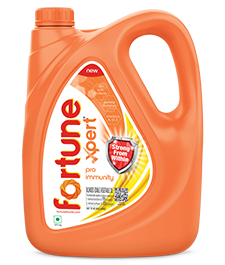
For those looking to add more nutrition to everyday cooking, Fortune Xpert Pro Immunity Oil is a blend of refined sunflower and rice bran oils, combining the benefits of both. Scientifically formulated to boost your immunity with 100+ natural antioxidants, Vitamins A, D and E, and Omega 6, it supports immunity and provides essential nutrients for overall wellness. Its immunity-boosting antioxidants help strengthen the immune system, while fatty acids help fortify cell membranes. The oil is light, easy to digest, and helps preserve the natural taste of food. It may also support heart health by helping reduce bad cholesterol, making it a nutritious choice for everyday cooking.
Conclusion
Rice bran oil and sunflower oil aren’t rivals so much as two useful tools for different jobs in the kitchen. Rice bran oil brings a higher smoke point and naturally occurring gamma-oryzanol, sunflower oil brings a lighter taste and vitamin E. Neither replaces a balanced diet, regular movement or medical advice, they’re simply one part of how you cook every day. The most sensible approach for most Indian households is to understand what each oil offers and choose based on your actual cooking habits.
FAQs
Q1. Is rice bran oil healthier than sunflower oil?
Rice bran oil offers gamma-oryzanol and a higher smoke point, while sunflower oil offers vitamin E and a lighter taste. Both can be part of a balanced, heart-conscious diet.
Q2. Can I mix rice bran and sunflower oil?
Yes, many households do this at home, and blended oils that combine the two, such as Fortune Xpert Pro Immunity Oil, are also available ready-made.
Q3. Which oil is better for deep frying?
Rice bran oil’s higher smoke point (around 232°C) makes it well suited to deep frying, though refined sunflower oil, with a smoke point of around 250°C, also performs well at high heat.
Q4. Which oil do cardiologists recommend?
Cardiologists generally recommend limiting saturated fat and using oils rich in unsaturated fats as part of an overall balanced diet, rather than endorsing one specific brand or oil. Both rice bran and sunflower oil fit this general guidance when used sensibly.
Q5. Which oil is the healthiest to use?
There’s no single “healthiest” oil for everyone. Most nutrition experts suggest using a variety of oils over time, including rice bran, sunflower, mustard and others, rather than relying on just one type.