
Best Cooking Oil for Weight Loss in India: Belly Fat Loss Tips
You have probably heard someone say it at a dinner table: “I’ve cut out oil completely, that’s how I’m losing weight.” It sounds logical. Oil is fat, fat has calories, so less oil should mean less weight. Except that is not quite how it works. Weight management has far more to do with your overall calorie intake, the quality of fat you eat, and your daily habits than with pouring less oil into the kadhai.
This article looks at what the science actually says about cooking oil and weight, which types of fat are worth understanding, and how to make more informed choices in your everyday cooking.
Quick Summary
- Cooking oil is calorie-dense regardless of type. There is no oil that burns fat by itself.
- The type of fat (saturated versus unsaturated) matters more for long-term health than the brand or bottle.
- Monounsaturated and polyunsaturated fats (MUFA and PUFA) may support satiety and are generally preferred over excess saturated fat.
- Portion control and cooking method matter as much as, if not more than, the specific oil you choose.
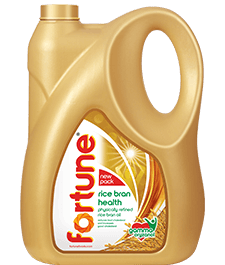
- Blended oils, such as those combining rice bran oil with other oils, offer a practical way to bring different types of fat into daily cooking.
Can Cooking Oil Really Help With Weight Loss?
No cooking oil is a weight-loss tool in the way a diet plan or an exercise routine is. What oil can do is influence the overall quality of fat in your diet, and fat quality is one factor, among several, associated with better metabolic health. Used thoughtfully, the right type and amount of oil can be part of a balanced, weight-conscious way of eating rather than a shortcut to it.
Fat metabolism basics
Every gram of fat, regardless of source, provides roughly nine calories, more than double that of carbohydrates or protein. This is true of all cooking oils. What differs between oils is the type of fatty acids they contain, which can influence cholesterol levels and how satisfied you feel after a meal.
MUFA, PUFA and satiety
Monounsaturated fats (MUFA) and polyunsaturated fats (PUFA) are types of unsaturated fats found in oils such as rice bran, sunflower, sesame and flaxseed oil. Some research suggests meals containing unsaturated fats can support a feeling of fullness, which may help with mindful portion sizes. However, this varies from person to person and meal to meal.
Best Oils for Weight Loss & Reducing Belly Fat
Some oils bring a more favourable fat profile than others, which can be useful within an overall calorie-conscious diet.
| Oil | Predominant Fat Type | Notable Compounds | Common Use |
|---|---|---|---|
| Rice bran oil | Balanced mix of MUFA and PUFA | Gamma-oryzanol, tocopherols and tocotrienols (vitamin E family) | Everyday cooking, frying, tempering |
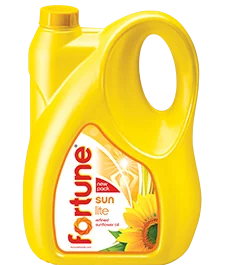
| Sunflower oil | High in PUFA (linoleic acid) | Vitamin E | Light sautéing, general cooking |
| Mustard oil | High in MUFA, contains omega-3 (ALA) | Allyl isothiocyanate, pungent compounds | Traditional Indian tempering and cooking |
| Groundnut (peanut) oil | Balanced MUFA and PUFA | Vitamin E | Frying, everyday cooking |
| Extra virgin olive oil | High in MUFA (oleic acid) | Polyphenols | Salad dressings, low- to medium-heat cooking |
Myth vs Fact: Oil and Weight Loss
There are plenty of misconceptions around cooking oils and weight loss. Let’s separate the common myths from what the evidence actually tells us.
Myth: Cutting oil to zero is the fastest way to lose weight.
Fact: Some dietary fat is necessary for absorbing certain vitamins and for overall nutrition. The goal is sensible quantity and better fat quality, not elimination.
Myth: Some oils literally burn belly fat.
Fact: No cooking oil has this effect. Fat loss depends on overall calorie balance, physical activity and diet quality over time.
Myth: All cooking oils are the same, so it doesn’t matter which one you buy.
Fact: Calories are broadly similar across oils, but the fatty acid profile differs, and that composition is worth paying attention to as part of a balanced diet.
Myth: Refined oils are automatically unhealthy.
Fact: Refining affects smoke point and shelf life, not necessarily the underlying fat composition. What matters more is the type of fat and how much you use.
How Fortune Xpert Active Supports an Active Lifestyle?
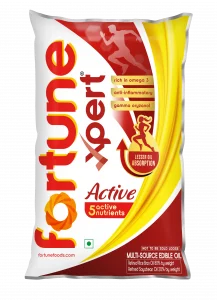
If your days involve a mix of work, family responsibilities and trying to stay active, the practical question is less about a single “miracle” oil and more about what fits sensibly into daily cooking. Fortune Xpert Active is a blend of rice bran oil and soyabean oil, bringing together nutrients such as omega-3, gamma-oryzanol, tocopherols, tocotrienols and vitamins A and D into one bottle.
- Omega-3 fatty acids, a type of PUFA associated with anti-inflammatory support as part of an overall balanced diet.
- Gamma-oryzanol, a naturally occurring antioxidant compound from rice bran oil.
- Tocopherols and tocotrienols, both part of the natural vitamin E family, known for their antioxidant properties.
- Vitamins A and D, added to support everyday nutritional needs.
This makes it a reasonable everyday option for households looking to support their nutrition through daily meals, rather than a substitute for a calorie-conscious diet or regular activity.
Practical Tips for a Weight-Conscious Kitchen
Small changes in how you use oil can make everyday cooking more mindful. Here are a few simple habits to try in your kitchen.
- Measure, don’t eyeball: Use a measuring spoon rather than pouring directly from the bottle. It is easy to underestimate how much oil goes into a single meal.
- Choose your cooking method wisely: Steaming, grilling and pressure-cooking generally use less oil than deep-frying.
- Avoid reusing oil that has been heated repeatedly: Repeated heating can affect the oil’s quality and is best avoided for health and taste reasons alike.
- Look at the label: Check the fatty acid breakdown and ingredient list rather than relying on packaging claims alone.
- Think about your diet as a whole: Oil is one part of the picture. Portion sizes, vegetable intake, protein and overall activity levels matter just as much, if not more.
FAQs
Q1. Which oil burns belly fat fastest?
No cooking oil burns belly fat. Fat loss depends on overall calorie balance, diet quality and physical activity.
Q2. Is rice bran oil good for weight loss?
Rice bran oil has a balanced mix of MUFA and PUFA and contains gamma-oryzanol, which has been studied for its antioxidant properties. It can be part of a balanced, weight-conscious diet.
Q3. How much cooking oil should I use daily?
General dietary guidance suggests keeping added fats and oils in moderation as part of an overall balanced diet. It is best to check with a doctor or registered dietitian for guidance suited to your individual needs.
Q4. What is the healthiest cooking oil to use?
Oils with a favourable balance of unsaturated fats, such as rice bran, sunflower or mustard oil, are commonly recommended as part of a varied diet.
Q5. Which cooking oil is best for a low-fat diet?
For a lower-fat approach, focus on reducing overall oil quantity across meals rather than switching between oils. Choosing oils rich in unsaturated fats and measuring portions carefully can support this approach.