
Healthy Cooking Oils for Blood Sugar Management Naturally
You probably think a lot more about roti versus rice, or how much sugar goes into your chai, than about the oil sitting in your kadhai. But if you or someone in your family is keeping an eye on blood sugar, it is worth knowing that fat quietly plays a role too, not just carbohydrates.
This isn’t about one “miracle” oil. It’s about understanding a few basics, so you can make a more informed choice in your own kitchen.
A quick overview of what’s ahead:
- How the fat in your cooking oil interacts with blood sugar and insulin
- Which commonly used Indian cooking oils are considered better choices, and why
- Cooking habits worth rethinking if you’re managing blood sugar
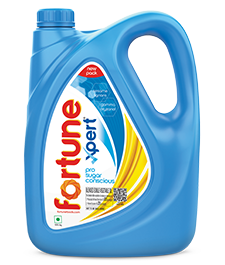
- Where a blended oil like Fortune Xpert Pro Sugar Conscious Oil fits into this picture
- Practical, everyday tips for cooking methods and portions
How Does Cooking Oil Affect Blood Sugar?
Cooking oil rarely gets blamed the way rice, sugar or maida do, but it plays a quieter role in the same story. It doesn’t spike blood sugar the way carbohydrate does, yet the type of fat you cook with regularly can influence how your body manages glucose and insulin over time. Here’s a closer look at why.
The role of fats in glycemic response
Cooking oil is pure fat, so it doesn’t contain carbohydrate or sugar itself, and it doesn’t cause the sharp blood sugar spike that rice, bread or sweets can. But fat still matters to blood sugar management in an indirect way. It affects how much fat circulates in your blood, how your cells respond to insulin, and how your body handles the meal as a whole.
Saturated vs unsaturated fat and insulin sensitivity
This is where the “type” of fat becomes relevant. Fats are broadly grouped into saturated fat, monounsaturated fat (MUFA) and polyunsaturated fat (MUFA and PUFA are both types of unsaturated fat, commonly found in plant-based oils, nuts and seeds). Experts suggest that replacing saturated fat with unsaturated fat is associated with improved insulin sensitivity, while diets high in saturated fat are more consistently linked with reduced insulin sensitivity. This doesn’t mean saturated fat is “toxic” or that unsaturated fat is a treatment. It means that, over time, the balance of fats in your everyday diet, including your cooking oil, is one contributing factor alongside overall diet quality, activity levels, weight and genetics.
Best Cooking Oils for Blood Sugar Control
Several oils commonly used in Indian kitchens are naturally higher in unsaturated fats. Here’s a simple comparison about the types of oil:
| Oil | Key Compound | Relevance for Blood Sugar-Conscious Diets |
|---|---|---|
| Rice bran oil | Gamma-oryzanol, natural antioxidants, MUFA | A source of monounsaturated fat and gamma-oryzanol, a compound studied mainly for its antioxidant activity and possible role in blood lipid levels. |
| Mustard oil (kachi ghani) | MUFA, omega-3 ALA, allyl isothiocyanate | Naturally lower in saturated fat with a favourable mix of MUFA and omega-3/omega-6 fatty acids; best used in moderation given its erucic acid content |
| Flaxseed oil | Omega-3 alpha-linolenic acid (ALA) | One of the richest plant sources of omega-3 ALA; some clinical studies suggest a possible role in supporting insulin sensitivity, though findings vary across trials |
Oils and Cooking Habits to Limit
Here are a few practices along with simple ways to make your everyday cooking more balanced:
- Reusing oil for repeated frying: Every time oil is reheated, it breaks down further and can form compounds that aren’t great for your health.
- Relying heavily on ghee, butter or vanaspati for daily cooking: These are higher in saturated fat. Experts recommend cutting down on saturated fat and replacing some of it with unsaturated fat where possible.
- Deep-frying as a default cooking method: Occasional pakoras are fine, but frequent deep-fried food tends to mean more oil, more calories and, often, more refined carbohydrate on the plate.
- Using far more oil than a recipe needs: It’s an easy habit to fall into, especially with tempering (tadka) and gravies. Oil is calorie-dense regardless of type, so portion still matters even with a “better” oil.
- Sticking to just one type of oil for everything: Different oils have different strengths, and no single oil provides every fatty acid your body benefits from. Blending oils is a simple way to get more variety.
How Fortune Xpert Pro Sugar Conscious Oil Fits In?
Fortune Xpert Pro Sugar Conscious Oil is a blend of rice bran oil and sesame oil. Both contribute unsaturated fats, and the blend brings together naturally occurring compounds from each, including gamma-oryzanol from rice bran oil and sesame lignans from sesame oil, along with other natural antioxidants. These compounds have been studied for their antioxidant activity and their potential relevance to blood lipid levels.
Used as part of a balanced plate, alongside attention to portion sizes, fibre, physical activity and regular check-ups, a blend like this can be a sensible everyday oil choice. It isn’t a shortcut around those fundamentals.
Practical Tips for Cooking Methods That Help Manage Sugar Levels
Managing blood sugar isn’t only about what you eat, but also how you prepare it. Here are some simple cooking habits to be mindful of:
- Measure your oil rather than pouring freely: A tablespoon per portion is a reasonable habit for most home cooking.
- Choose gentler methods more often: Steaming, pressure-cooking, roasting and light sautéing generally use less oil than deep-frying.
- Save deep-frying for occasional treats: Always use fresh oil each time rather than reusing it.
- Pair your fat choice with your carbohydrate choice: A meal with unsaturated fat, fibre-rich vegetables and whole grains tends to have a gentler effect on blood sugar than one with refined carbohydrate and saturated fat.
- Rotate your oils: Using rice bran, mustard or a blended oil like Fortune Xpert Pro Sugar Conscious Oil on different days, or for different dishes, is an easy way to diversify the fats in your diet.
- Read the label: Check the fat breakdown (saturated, MUFA, PUFA) rather than relying on packaging claims alone.
Conclusion
Cooking oil is one small, manageable part of a much bigger picture when it comes to blood sugar. Choosing oils higher in unsaturated fats, using sensible quantities, avoiding repeated reuse, and pairing your oil choice with an overall balanced diet will do far more than switching bottles alone ever could. If you’re managing diabetes or prediabetes, these are useful habits to discuss with your doctor or dietitian, who can advise on what’s right for your specific health needs.
FAQs
Q1. Is rice bran oil good for diabetics?
Rice bran oil is a source of monounsaturated fat and gamma-oryzanol, a compound studied for its antioxidant properties and possible role in blood lipid levels.
Q2. Can changing cooking oil really lower blood sugar?
Cooking oil alone is unlikely to meaningfully lower blood sugar. What research does support is that replacing saturated fat with unsaturated fat is associated with better markers of insulin sensitivity over time.
Q3. What are the top 3 healthiest cooking oils?
Oils higher in unsaturated fats and lower in saturated fat, such as rice bran oil, mustard oil and sunflower oil, are generally recommended by experts as sensible everyday choices.
Q4. cooking oil is good for high blood sugar?
Oils with a higher proportion of unsaturated fats, such as rice bran, mustard, sesame and flaxseed oil, are generally considered better choices than oils or fats high in saturated fat.
Q5. What oils should diabetics avoid?
There’s no oil that needs to be avoided entirely for most people, but health guidance generally suggests limiting fats high in saturated fat, such as palm oil, ghee, butter and vanaspati, particularly when used frequently or in large quantities.
Q6. Is sunflower oil ok for diabetics?
Refined sunflower oil is high in polyunsaturated fat and low in saturated fat, which makes it a reasonably healthy everyday option.