How Cooking Oil Impacts Cholesterol Levels and Heart Health?
The oil you use every day, for your tadka, your stir-fry, your roti, is quietly shaping your heart health, meal by meal. The fats in cooking oil and cholesterol levels are directly connected, and the type of oil you choose determines whether your arteries get steady support or steady stress. In India, where cardiovascular disease is rising, and kitchen habits run deep, this is not a trivial decision.
Switching to the right oil does not mean sacrificing taste or changing how you cook. It simply means making a smarter choice with what you already do every day. This guide breaks down the science in plain terms, examines how common cooking oils affect your cholesterol, and explains why Fortune Xpert Oil, crafted for modern Indian kitchens, is becoming the go-to choice for the best cooking oil for heart health across health-conscious households.
What Is Cholesterol and Why Does It Matter?
Cholesterol is a waxy substance your body needs to function, build cell membranes, support hormone production, and help digest food. The issue is not cholesterol itself but the balance between these two types.
- LDL cholesterol (low-density lipoprotein) is the type that deposits along artery walls, narrowing them over time and raising heart disease risk.
- HDL cholesterol (high-density lipoprotein) picks up excess cholesterol and carries it back to the liver for removal.
The Science Behind Fats in Cooking Oil
Every cooking oil is essentially a mixture of different types of fat. The ratio of those fats determines whether the oil supports or harms your cholesterol levels. Here is what each type does.
Saturated Fats – The Ones to Watch
Found in coconut oil, palm oil, and ghee, saturated fats raise LDL cholesterol when consumed regularly in excess. They are solid at room temperature and stable under heat, but their impact on cardiovascular health means they should be used in moderation as part of a balanced diet.
Trans Fats – The Most Harmful
Trans fats, produced through partial hydrogenation and present in vanaspati and many processed foods, are the worst option for your heart. They raise LDL and lower HDL simultaneously.
Monounsaturated Fats (MUFA) – Heart-Friendly
MUFAs, found in rice bran, mustard, and olive oil, lower LDL without reducing HDL. They are the most heart-supportive fat type for daily cooking, and a cornerstone of the healthy cooking oil category.
Polyunsaturated Fats (PUFA) – Essential Fatty Acids
PUFAs, including omega-3 and omega-6 fatty acids, are healthy fats your body cannot produce on its own. Found in sunflower, soybean, and flaxseed oils, they help reduce LDL cholesterol and support overall cardiovascular function.
How Different Cooking Oils Affect Heart Health?
Each oil brings a different fat composition to your kitchen. Here is what you need to know about the most common ones.
Rice Bran Oil
The benefits of rice bran oil are backed by solid research. It is rich in gamma-oryzanol, a natural compound found in the outer bran of rice grains, which has been shown to lower LDL, raise HDL, and protect artery walls from oxidative damage. It also contains vitamin E and natural antioxidants and has a high smoke point (~250°C). Rice bran oil is a key ingredient in Fortune Xpert Total Balance, Fortune Xpert Pro Immunity, and Fortune Xpert Pro Sugar Conscious, making it a versatile component in specialised blended oils.
Soybean Oil
Soybean oil offers a useful mix of omega-3 and omega-6 polyunsaturated fats, making it a solid choice for LDL cholesterol reduction when it replaces saturated fats in the diet. It has a neutral flavour and a moderate smoke point, and works well as a base in blended oil formulations. Fortune Xpert Total Balance combines soybean oil with rice bran oil and flaxseed oil to provide a balanced fatty acid profile for everyday cooking.
Mustard Oil
Mustard oil is high in MUFAs and contains omega-3 ALA (alpha-linolenic acid), both of which support heart health. Long used in Indian households, particularly in North and East India, it performs well under high heat and is associated with better cholesterol profiles when used consistently as part of a balanced diet.
Sunflower Oil
Sunflower oil is primarily composed of omega-6 polyunsaturated fats and can help lower cholesterol when it replaces saturated fat in cooking. High-oleic sunflower varieties, which are higher in MUFAs, are more heat-stable and particularly useful in blended oil formulations for both performance and nutritional value. Fortune Xpert Pro Immunity combines sunflower oil with rice bran oil and is enriched with vitamins and antioxidants to support everyday wellness.
Flaxseed Oil
Flaxseed oil is one of the richest plant-based sources of ALA, an omega-3 fatty acid. It is best used cold, in dressings, or drizzled over food after cooking, as its low smoke point makes it unsuitable for high-heat cooking. Its omega-3 content helps counterbalance the dominance of omega-6 in standard Indian cooking. Fortune Xpert Total Balance Oil includes flaxseed oil alongside soybean and rice bran oils to provide a more balanced ratio of essential fatty acids in everyday cooking.
Why Are Blended Oils Better for Cholesterol and Heart Health?
Blending allows formulators to combine the best properties of multiple oils, creating a product with a healthier MUFA-to-PUFA ratio, improved cooking stability, and broader nutritional coverage than any single oil can offer. For Indian families who cook across a wide range of methods and temperatures, a well-designed blended cooking oil is the most practical, nutritionally complete solution.
Fortune Xpert Cooking Oil – India’s Smart Choice for Cholesterol Management and Heart Health
Fortune Xpert Oil is Adani Wilmar’s health-first range of edible oils, designed specifically for modern Indian kitchens that care about what goes into every meal. The range includes three thoughtfully formulated variants:
- Fortune Xpert Total Balance: A blend of flaxseed, rice bran, and soybean oils, delivering a balanced omega-3 to omega-6 ratio for comprehensive everyday heart support.
- Fortune Xpert Pro Immunity: A blend of 70% refined rice bran oil and 30% refined sunflower oil, enriched with oryzanol and omega-6 to support LDL reduction and immunity.
- Fortune Xpert Pro Sugar Conscious: A blend of 80% physically refined rice bran oil and 20% unrefined sesame oil, enriched with gamma-oryzanol and sesame lignans to support both cholesterol management and blood sugar balance.
The common thread across all three is rice bran oil, and its naturally occurring gamma-oryzanol, which directly improves the HDL/LDL ratio, limits LDL oxidation, and reduces dietary cholesterol absorption. This is not a synthetic addition; it is a plant-derived active that makes Fortune Xpert Oil one of the most scientifically grounded answers to the question: which oil reduces LDL cholesterol naturally?
Cooking Habits That Affect Oil’s Impact on Cholesterol
The right oil used the wrong way still causes harm. Your cooking habits are just as important as your oil choice.
Avoid Repeated Heating of Oil
Reheating oil, especially during deep-frying, breaks down its structure, generating harmful free radicals and trans-like compounds. Use fresh oil each time, and discard oil that has darkened or begun to smoke unusually.
Don’t Exceed Smoke Points
Heating oil past its smoke point destroys its beneficial nutrients and creates harmful by-products. Rice bran oil’s high smoke point (~250°C) makes it one of the safest choices for Indian high-heat cooking.
Quantity Matters
Even the best healthy fats contribute to calorie intake. The Indian Council of Medical Research (ICMR) recommends that total fat, including cooking oil, should comprise 25-30% of daily calorie intake for healthy adults.
Rotate Your Oils
Alternating between a blended oil like Fortune Xpert and a cold-pressed oil like flaxseed throughout the week provides your body with a more complete range of fatty acids.
Practical Tips for Choosing a Heart-Healthy Cooking Oil
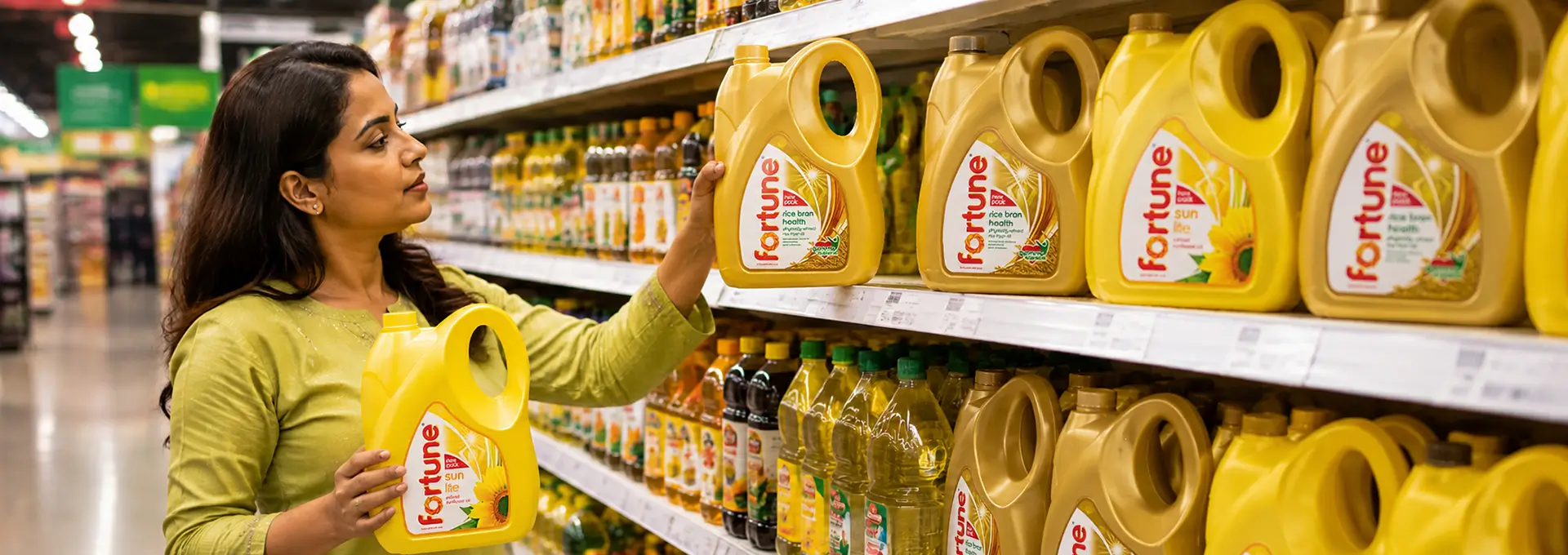
When you are standing in the supermarket aisle, these are the things that matter:
- Fat profile first: Choose oils high in MUFAs or PUFAs with minimal saturated fat.
- Look for gamma-oryzanol: Naturally present in rice bran oil, it supports HDL cholesterol and lowers LDL cholesterol.
- Smoke point matters: For Indian cooking, choose oils that can handle high heat without degrading.
- Choose blends over single oils: A well-formulated blend delivers greater fatty acid diversity than any single oil.
- Read the label: Physically refined or cold-pressed options retain more natural nutrients.
- Trust transparent brands: Fortune Xpert clearly states its blend ratios and active ingredients; that kind of transparency is what you should expect from a heart-friendly cooking oil.
Choosing a healthy cooking oil with the right fat balance, natural actives like gamma-oryzanol, and a formulation built for the way Indian families cook is one of the most impactful, low-effort changes you can make for your heart. Fortune Xpert Oil brings together rice bran science, smart blending, and real kitchen versatility, so your food tastes right, and your heart gets the care it deserves.
FAQs
Which cooking oil is best for reducing cholesterol?
Rice bran-based blended oils, such as Fortune Xpert, are among the most effective options. Gamma-oryzanol in rice bran oil lowers LDL and supports HDL levels naturally through regular daily use.
Does cooking oil directly affect LDL and HDL levels?
Yes. Oils high in saturated or trans fats raise LDL. Oils rich in MUFAs and PUFAs, like rice bran, mustard, and sunflower, help lower LDL and maintain healthier HDL levels.
Is rice bran oil good for heart health?
Yes. Rice bran oil is rich in gamma-oryzanol, vitamin E, and antioxidants. It has been shown to improve the HDL/LDL ratio and performs well at high cooking temperatures, making it ideal for daily Indian cooking.
How much cooking oil should I use per day for a healthy heart?
ICMR guidelines recommend keeping total fat intake at 25-30% of daily calories. For most adults, this equates to approximately 3-4 teaspoons of cooking oil per person per day as a general reference.
Is blended oil better than single-source oil for cholesterol control?
Generally, yes. Blended oils combine the fatty acid strengths of multiple sources, delivering a more balanced MUFA-PUFA ratio and broader nutritional benefit than a single-source oil alone.
What is gamma-oryzanol, and how does it help with cholesterol?
Gamma-oryzanol is a natural plant compound found in rice bran oil. It reduces dietary cholesterol absorption, lowers LDL cholesterol, raises HDL cholesterol, and limits oxidative damage to artery walls.