
Best Cooking Oil to Support Your Diet Plan for Health
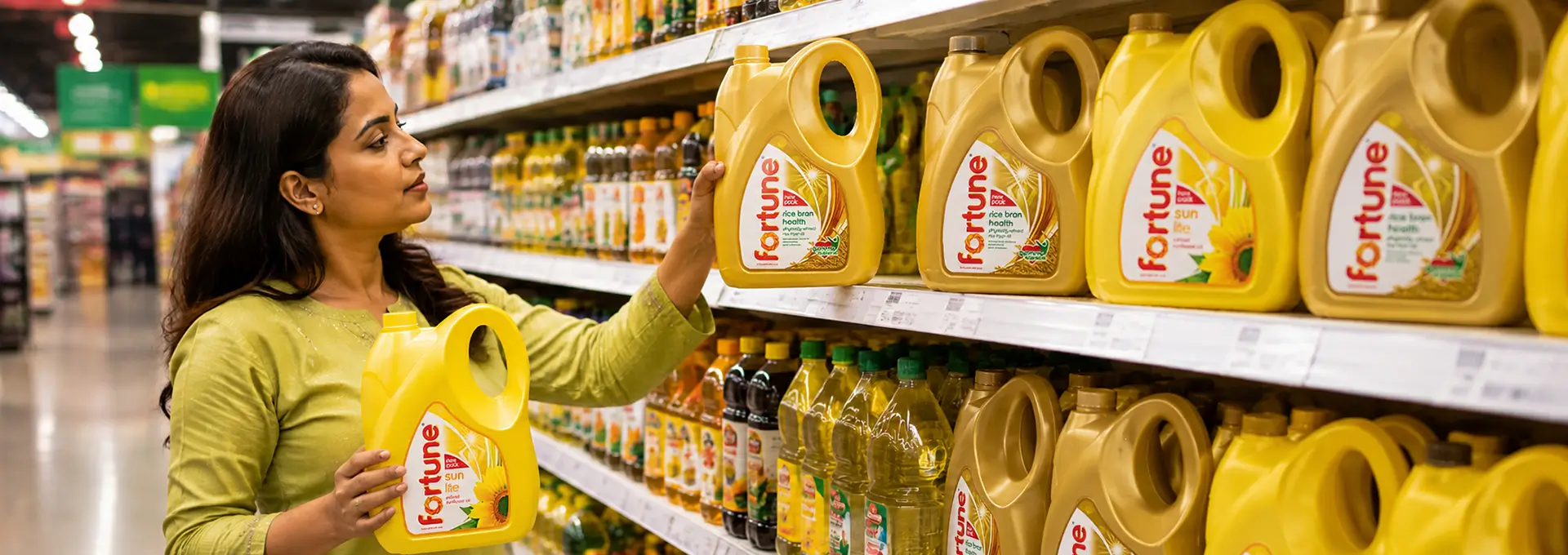
Walk down the oil aisle of any Indian supermarket and you will find a dozen bottles, each claiming to be the answer to good health. Mustard, groundnut, sunflower, rice bran, olive, cold-pressed, and blended; the choices multiply every year, and so does the confusion. If you have ever stood there wondering which cooking oil is good for health, you are not alone.
Here is the short answer, in case you are short on time: there is no single “most healthy cooking oil” that suits everyone. What matters more is the balance of fats an oil provides, how it fits into the way you already cook, and how much variety you bring into your overall diet.
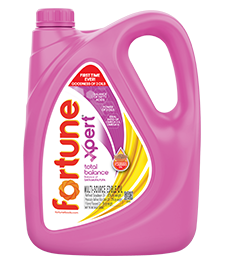
This article walks through what actually makes an oil healthier, compares a few commonly used options, and looks at how blended oils, such as Fortune Xpert Total Balance, try to bring different fats together in one bottle.
What Makes a Cooking Oil Healthy?
Before comparing oils, let’s understand what you are actually comparing.
Saturated vs Unsaturated Fat
Every cooking oil is a mix of three types of fatty acids:
- Saturated fatty acids (SAFA): generally solid or semi-solid at room temperature, found in higher amounts in ghee, butter and coconut oil.
- Monounsaturated fatty acids (MUFA): found in oils such as groundnut, mustard and olive oil.
- Polyunsaturated fatty acids (PUFA): found in soyabean, sunflower and flaxseed oil.
Most nutrition guidance suggests keeping a check on saturated fat and including a reasonable share of unsaturated fats (MUFA and PUFA) in your everyday diet.
Omega-3 to Omega-6 Ratio
Omega-3 and omega-6 are both types of polyunsaturated fats, and both are essential. Omega-6 is easy to get in an Indian diet, since it is abundant in commonly used oils such as sunflower and soyabean. Omega-3, on the other hand, is harder to come by unless you eat fish regularly or use oils such as flaxseed that naturally contain it.
Nutrition experts generally suggest that the ratio between omega-6 and omega-3 in the diet is important. This is one reason flaxseed oil, a source of alpha-linolenic acid (a plant-based omega-3), has drawn attention as an ingredient in blended cooking oils.
Smoke Point Relevance
Smoke point is the temperature at which an oil starts to break down and smoke. For everyday Indian cooking, which often involves tempering, deep frying, and high-heat sautéing, an oil with a reasonably high smoke point tends to hold up better without breaking down too quickly.
Healthiest Cooking Oils for a Balanced Diet
| Oil | Best For | Key Nutrient Feature |
|---|---|---|
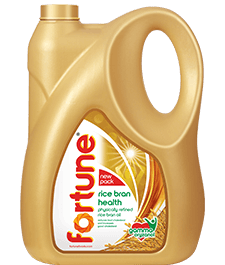
| Rice bran oil | Everyday cooking, sautéing, frying | Contains gamma-oryzanol, a naturally occurring antioxidant compound |
| Flaxseed oil | Adding omega-3 to the diet | Rich in alpha-linolenic acid (plant-based omega-3) |
| Blended oils (e.g. rice bran, flaxseed, soyabean) | Households wanting a broader fat profile without switching bottles | Combines SAFA, MUFA and PUFA along with omega-3 and omega-6 sources in one oil |
How to Match Oil to Your Diet Goals
If your focus is a heart-conscious way of eating, look for an oil that offers a balance between SAFA, MUFA and PUFA, along with some omega-3 content. If you are watching your weight or overall calorie intake, remember that all cooking oils, regardless of type, provide roughly the same number of calories per gram. The fat type may support a more balanced diet, but portion control matters more than the specific oil you use. If general wellness and variety are your goals, using a blended oil for daily cooking and occasionally including other oils, such as mustard or groundnut, for specific dishes is a reasonable approach.
This is the thinking behind blended oils such as Fortune Xpert Total Balance, which combines rice bran, flaxseed and soyabean oils in one bottle. The idea is to bring together SAFA, MUFA and PUFA along with a defined omega-3 to omega-6 ratio, so a household does not need to switch between multiple bottles to get a broader fat profile.
Fortune Xpert Total Balance – A Balanced Fat Profile
Fortune Xpert Total Balance is positioned as an everyday cooking oil made by combining different fat sources. Rice bran oil contributes its typical light cooking properties and naturally occurring antioxidant compounds. Flaxseed oil contributes plant-based omega-3 fatty acids. Soyabean oil adds further polyunsaturated fat to the mix.
Together, according to Fortune Foods, this blend is designed to offer a proportion of saturated, monounsaturated and polyunsaturated fats along with an omega-3 to omega-6 ratio intended to suit an average Indian diet. As with any cooking oil, it is meant to be used as part of an overall balanced diet, alongside regular physical activity and variety in food choices.
Common Myths About “Healthy” Oils
- One oil is best for everyone: In reality, dietary needs vary by individual, and most nutrition guidance points towards variety and balance rather than a single hero oil.
- Cold-pressed always means healthier: Cold-pressed refers to the extraction method, not to a superior nutrient profile. It can affect flavour and some micronutrient retention.
- Low-fat means no oil at all: Fats, including those from cooking oil, play a role in nutrient absorption and everyday cooking. The concern is usually about the type and quantity of fat, not eliminating it.
- Imported oils like olive oil are superior to Indian oils: Olive oil is a good source of monounsaturated fat, but Indian oils such as rice bran, mustard and groundnut also offer valuable fat profiles suited to high-heat Indian cooking.
Conclusion
Choosing a cooking oil does not need to be complicated. Look at the type of fat it offers, check whether it includes a reasonable share of unsaturated fats, and consider how you typically cook at home. Whether you choose a single oil or a blended one such as Fortune Xpert Total Balance, the oil is only one ingredient in a much larger diet. Variety, portion sense and consistency across your everyday meals will always matter more than any one bottle on your shelf.
FAQs
Q1. What is the healthiest oil for diet?
There is no single oil that is healthiest for every diet. What matters more is a reasonable balance of saturated, monounsaturated and polyunsaturated fats, along with variety across your overall meals.
Q2. Should I rotate cooking oils?
Many nutritionists suggest rotating oils, or using a blended oil, to get a wider range of fatty acids rather than relying on just one type over the long term.
Q3. Is olive oil better than Indian cooking oils?
Olive oil offers monounsaturated fat, but Indian oils such as rice bran, groundnut and mustard also provide useful fat profiles and are generally better suited, in terms of smoke point and cost, to everyday Indian cooking methods.
Q4. Which oil is not good for weight loss?
No cooking oil is specifically “bad” for weight loss on its own, since all oils are calorie dense. The bigger factor is the overall quantity of oil used and total dietary intake, rather than the type of oil alone.
Q5. Is sunflower oil good for weight loss?
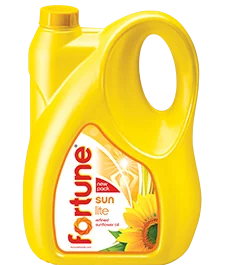
Sunflower oil is a source of polyunsaturated fat and can be part of a balanced diet, but like any oil, it should be used in moderation. It does not have a specific weight-loss effect on its own.